2025 Legislative Update

As many in our community know, this has been an eventful and impactful legislative session. Thank you to everyone who joined us in advocating for survivor services! We appreciate knowing that when we put out a call for support, you answer.

While we didn’t get everything we asked for, we know that it was an unprecedented moment in our state history. In addition to the incredibly challenging funding landscape, the state’s budget forecast that was released mid-May was $500 million less than anticipated.

The legislature this session had 3,317 bills introduced, the most ever in a session. There were also a significant number of policy bills brought forward by legislators that impact survivors of domestic and sexual violence. It’s fair to say that it’s been a busy first half of the year.

We wanted to highlight some of the bills that impact survivors in this post-session legislative update.

Funding for Survivor Services

After a valiant effort to secure funding to maintain the current level of services, we had a partial success in HB 5014. The ODSVS fund is the only source of general fund revenue for the confidential, trauma-informed, community-based, non-profit and Tribal survivor service and shelter programs across the state was funded at 50%, receiving half of the requested amount of $10M as in years prior. This results in a cut of $5M for programs throughout the state.

We are grateful that the Survivor Housing Fund (SHF) was granted the full requested amount of $6M. This fund allows survivors to access critical support to stabilize their housing when navigating domestic violence. This was a big win for survivors.

Oregon—along with every other state in the nation—was recently notified of a pending 42% reduction in its federal Victims of Crime Act (VOCA) allocation. These critical funds support victim services in every county through nonprofit organizations, child abuse assessment centers, district attorneys’ offices, and more. HB 3196 was introduced to prevent disruptions in these essential services by bridging the gap while bipartisan efforts continue at the federal level to address the root cause of the shortfall.

Unfortunately, the bill did not pass, and Oregon is now facing an $18.5 million cut to these vital programs. This reduction will significantly affect staffing and service capacity statewide—putting survivors’ access to support, safety, and justice at risk.

We are deeply grateful to everyone who sponsored and advocated for the passage of HB 3196, including: Representatives Kropf, Hartman, Wallan, Grayber, Helfrich, Neron, Senator Taylor, and the many sponsors who supported this bill.

Additionally, rental assistance was cut from the Oregon Housing and Community Services (OHCS) budget, representing a loss of services to stabilize housing for survivors and community members throughout the state.

The silver lining is that HB 3070 which allocated $400,000 for the SAE/SANE Certification Committee (SCC) passed through the end of session bill HB 5006. Sexual Assault Nurse Examiners (SANE) in Oregon are specially trained to understand the dynamics of sexual assault, the unique healthcare needs of sexual assault victims, and proper collection of forensic evidence that may be used by law enforcement in sexual assault investigations. The SCC helps support access to trauma-informed and trained medical forensic sexual assault nurse examiners across the state.

Thank you to Representatives Kropf, Andersen, Gamba, Grayber, Hartman, Mannix, Munoz, Neron, Nguyen H., and Pham H. for sponsoring HB 3070.

Department of Human Services victim-specific programs escaped without cuts. SB 5526, the agency budget bill, together with the end-of-session bill (HB 5006), maintained funding levels for this biennium for survivor-specific DHS programs

SB 180 – anti-SLAPP bill

This bill expanded the anti‐Strategic Lawsuit Against Public Participation law (commonly known as SLAPP) to specifically include any true public disclosure of sexual assault, including on social media. Previously, SLAPP protected sexual assault disclosures to police or another investigative agency. We celebrate this expansion of protections for survivors choosing to disclose their experience. SB 180 passed unanimously in the legislature and takes effect on January 1, 2026.

Thank you to the Senate Interim Committee on Judiciary for requesting this bill be considered by the legislature.

Read more about the bill and the efforts to get it passed here.

SB 599 – Prohibits Bias by Landlords

This legislation prohibits landlords from inquiring about or discriminating on the basis of a tenant’s or applicant’s immigration or citizenship status. This means that a landlord cannot ask a tenant their immigration status, or threaten to disclose a person’s immigration status to ICE, or reject an applicant based on their immigration status. This is crucial for immigrant survivors of domestic and sexual violence because abusers often use immigration status as a means of control and isolation. This bill took effect on May 28, 2025.

Thank you to Senators Campos and Ruiz for being the Chief Sponsors on this important legislation, and the many co-sponsors who supported it.

SB 710 – Judicial Training

This legislation represents a huge win for survivors. It requires that state court judges meet ongoing learning requirements related to domestic and sexual violence. Our community has been advocating for judicial training for decades and we are incredibly grateful for its near unanimous support in both chambers. This bill will take effect on January 1, 2026, and begin with studying training options.

Thank you to Senators Sollman, Weber, and Neron for being the Chief sponsors, and the many Senators and Representatives who co-sponsored it. We are also grateful to The Family Justice Center of Washington County for their strong advocacy on this bill.

SB 867 – Addresses Sexual Conduct in Schools

This bill helps to create a culture of safety in Oregon’s education system first by providing students who suffer discrimination with student specific services, and second, by closing a safety gap relating to sexual conduct reports involving students and seasonal contractors, agents, and volunteers. It further clarifies the process related to disclosure in sexual conduct investigations. This bill takes effect January 1, 2026.

Thank you to Governor Tina Kotek for Department of Education for bringing this legislation forward.

SB 1121 – Makes Doxxing a Misdemeanor

Building on a previous law that empowered victims to sue, this bill makes the act of doxxing a misdemeanor by creating the crime of unlawful disclosure of private information. Punishment is up to a maximum of six months’ imprisonment, $2,500 fine, or both.  This law took effect on June 24, 2025.

Thank you to the Senate Judiciary Committee for sponsoring this legislation.

HB 2299 – Prohibits Unlawful Dissemination of Digital Intimate Images

This legislation modifies the crime of unlawful dissemination of an intimate image to include the disclosure of digitally created, manipulated or altered images. This bill also increases the penalty to a maximum of five years’ imprisonment, $125,000 fine, or both, or 10 years’ imprisonment, $250,000 fine, or both, if the person has a prior conviction. It additionally creates the crime of unlawful dissemination of an intimate image in the second degree with a punishment of a maximum of 364 days’ imprisonment, $6,250 fine, or both, or five years’ imprisonment, $125,000 fine, or both, if the person has a prior conviction. This bill passed both chambers with unanimous support and takes effect January 1, 2026.

Thank you to Representatives Mannix, McLain, Hartman, and Senator Sollman for being the Chief Sponsors on this legislation, and the many co-sponsors who supported it.

HB 2456 – Modification of the S.A.V.E Fund

The Sexual Assault Victims’ Emergency (S.A.V.E.) Medical Response Fund. Because of the S.A.V.E. Fund, survivors can access essential medical care, forensic evidence collection, and mental health support after experiencing sexual violence. No survivor should ever have to pay for the cost of their own victimization. And, all survivors, regardless of their financial resources, should have access to the care they need. This bill takes effect January 1, 2026.

Thank you to Attorney General Dan Rayfield for bringing this legislation forward.

HB 2492 – DV Lookback

This bill extends the expungement waiting period for restraining orders from one year to five years. This allows the pattern of abuse to be preserved in the record and considered in relation to expungement requests for domestic and sexual violence cases. This is another big win for survivors!

CWS previously gave testimony on this bill during our Advocacy Day in April. See the testimony here.

Thank you to the House Interim Committee on Judiciary and Representative Kropf for bringing this legislation forward.

HB 2975 – DV Loophole

This bill restores the courts’ ability to impose separate sentences for certain acts of violence, including strangulation and assault, in domestic violence cases. The bill aims to address the 2024 Oregon Court of Appeals decision in State v. Miles per the Democratic Senate Majority Office. That decision ruled that in cases relating to domestic violence and abuse, all charges must be merged into one single charge. There is no other category of crime for which this happens. This bill will take effect on the 91st day following adjournment of the legislative session and is an important victory for survivors!

We are grateful for the unanimous support for this legislation. A big thank you to Representative Hartman for being the Chief Sponsor of this bill, and the many co-sponsors who supported it. Read more about this bill here.

HB 3582 – Statute of Limitations

The bill to eliminate the statute of limitations for civil actions based on sexual assault or child sexual abuse passed both chambers unanimously. This means that survivors of sexual assault and child sexual abuse can file a civil suit against their perpetrators and/or entities that allowed, permitted, or encouraged the assault or abuse to occur at any time after the abuse occurs. This legislation took effect immediately on passage.

Thank you to Representatives Hartman, Taylor, Meek, Bowman, Nguyen H., Owens, Manning Jr., Neron, and Misslin for being Chief Sponsors of the bill, and all the many co-sponsors who supported it.

HB 3766 – Civil Action for Intimate Images

This legislation allows a plaintiff to bring a civil action against a person who transmits an intimate image to the plaintiff’s computer or electronic device in certain circumstances. This means that if someone sends a nude or sexually explicit image without the consent of the recipient and with the intent of harassing or harming the recipient, the recipient may take bring a civil suit within two years. This applies to adults over the age of 18 only. This bill passed with unanimous support.

Thank you to Representatives Chaichi, Hartman, and Tran for being the Chief Sponsors for this legislation on behalf of survivors, and the many co-sponsors who supported it.

HB 3816 – Funding for Victim Services

This bill provides for 50 percent of awards of restitution ordered to an insurance carrier to be paid to the Department of Justice for purposes of victim services funding. This means that when the victim is an insurance provider and chooses to utilize public resources, such as a District Attorney, to obtain restitution through criminal court instead of civil court, a portion of the collection will be shared with victim services.

We are grateful for the legislature’s work in trying to find creative solutions to the funding issues victim services are facing. A big thank you to Representative Kropf for being the Chief Sponsor on this bill and to Senators Broadman and Girod for their advocacy and support in the Senate.

The Take It Down Act

This federal measure was aimed to address the nonconsensual distribution of intimate imagery (NDII) (often historically referred to in public discourse as “nonconsensual pornography” or “revenge porn”). The law represents a long-awaited step forward in establishing nationwide protections for victims of image-based sexual abuse.

For survivors—especially those navigating the intersecting harms of domestic violence and digital exploitation—this moment is both deeply significant and fraught with questions. While the law provides powerful new tools to pursue justice and seek the removal of nonconsensual intimate images, it may also introduce challenges for survivor privacy and protected expression.

The Act makes it a federal crime to publish nonconsensual intimate imagery using an interactive computer service – any website, app, or platform that lets people share, post, or respond to content from others. The Act also establishes a rapid takedown process, requiring certain platforms that host user-generated content to remove reported material within 48 hours of receiving a complaint. Failure to do so could be considered an unfair or deceptive practice under the jurisdiction of the Federal Trade Commission (FTC).

Read more from the National Network to End Domestic Violence (NNEDV) through their Tech Safety website.


two young people wearing orange helmets prepare to climb

With the changing of seasons, we wanted to take a moment to share some of the incredible Pathways to HOPE events that took place over the summer.

For the first time since 2019, Camp HOPE America – Oregon hosted overnight camp! For two weeks, campers ranging in age from 7 to 16 years old participated in activities like white water rafting on the Deschutes River, archery—which everyone loved—and HUGE water balloon fights, just to name a few. Every night, we gathered around the campfire, sang songs, ate dessert, and recounted inspiring stories of the HOPE Hero from that day. Each HOPE Hero is someone who, despite having faced hardships and adversity, pursued their dreams and did not let their experience of trauma define who they are or what they do. Like every year at camp, there were difficult moments that came up, yet the campers showed such resilience and comradery that they not only worked through the challenges, but grew from them! This was inspiring to staff, counselors, and volunteers alike. We are already looking forward to overnight camp next summer!

young kids being playful

Gratitude for the CWS Community!

Thank you so much to all our partners who make it possible – our Camp Counselors, HOPE Leaders, Health Care Volunteers, Program Vendors and partner camp, Community Partners and most importantly, campers and families, including, in part:

Camp HOPE America
River Drifters Rafting in Oregon & Washington
Adventures Without Limits
Clackamas County Sheriff’s Office
Clackamas County Peace Officers Benevolent Foundation
A Safe Place Family Justice Center

young girl rides a horse

Pathways to HOPE Pool Party

Our first Pathways to HOPE Event of the year was also the 30-day reunion event for participants this summer’s Camp HOPE. Held at the Oregon City Pool on a blazing hot day, we barbecued, swam, laughed, and crunched on frozen otter pops to our hearts delight!

two people swimming in a pool

It was a full agenda for this year’s long session in Salem. CWS continues to be at the seat of many tables to ensure that the nuanced and complex issues that relate to survivors of domestic and sexual violence are better understood in the context of policy and the potential implications, both intended and unintended, that occur. Here’s a recap of our engagement as well as some of the specific bills we want to highlight.

CWS Participation

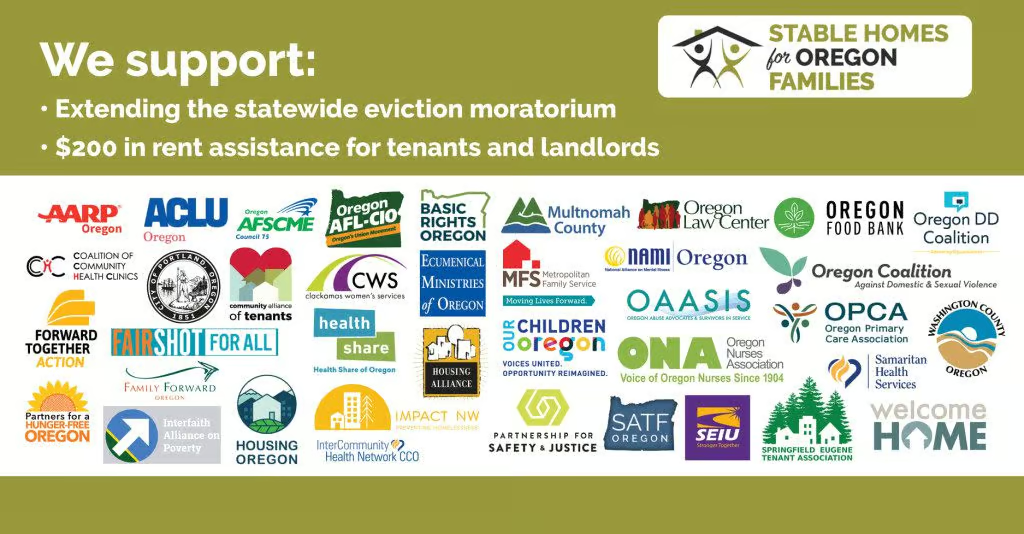
Our public policy efforts are primarily done in coalition with The Oregon DVSA Legislative Alliance to End Violence Against Women, as well as others such as Our Children Oregon, Stable Homes Coalition

We started a CWS Staff Public Policy Workgroup this year and members from that group provided testimony and went to the Capital participating in meetings with elected officials. The Board is also engaged in our policy work through a Public Policy Committee. Both the workgroup and committee give input, weigh the pros and cons of legislative work, and engage in advocacy. We are grateful for this participation because public policy is best shaped with input and engagement from multiple perspectives.

Our agency has participated in policy and ballot measure campaigns (like HereTogether, Safe Kids Coalition), speakers’ events, reaching out to elected officials, and more.

  • Some of the ways that we participate:
    • Action Alerts
    • Lobbying and direct advocacy
    • Testimony
    • Campaign engagement
    • Awareness raising
    • Education
    • Defend survivor rights and the policies that protect them
    • Conduct policy analysis
    • Collect and analyze data
    • Meet with implementers and decision-makers
    • Conduct study tours—giving tours to elected officials, policy makers, and legislative staff
    • Evaluate outcomes
    • Policy monitoring and tracking

Our Executive Director also sits on various workgroups and engages with elected officials for them to learn more about the issue of domestic violence and our work, including:

Bills and Policy

We want to highlight and celebrate a few of our successes from Oregon’s 2023 legislative session:

  • This year, the focus was on continuing critical ODSVS and SHF funding (SB 5506).
    • Oregon Domestic and Sexual Violence Services (ODSVS) received $10M and helps fund 60 community-based organizations and Tribal communities across the state for basic domestic and sexual violence and trafficking services.The Survivor Housing Fund (SHF) received $6M and is highly flexible general funding for housing.CWS hosted education sessions for lawmakers and participated in lobby days. ODSVS funds help us fund Latina services, outreach and education, prevention programming, and youth services. SHF funds support survivors to meet housing needs in a variety of ways. We are glad these were approved!
    • Passing these crucial funding bills was a bipartisan effort, and there are many more who helped make this happen than we can thank here. A few we want to highlight are: Sen. Sara Gelser Blouin, Sen. Kathleen Taylor, Sen. Wlnsvey Campos, Rep. Jason Kropf, Rep. Lily Morgan, Rep. Bobby Levy, and Dacia Grayber, as well as Gov. Kotek who included the funding in her budget.

  • Campus DVSA Response (HB 3456): Requires college campuses to conduct a climate survey of students to understand sexual misconduct taking place in addition to schools being required to have confidential advocates on campus or partner with a local victim advocacy organization. This was a huge win and gratitude goes to Rep. Annessa Hartman for her unwavering commitment to survivors in addition to Rep. Mark Gamba, Sen. Dembrow, the Oregon Sexual Assault Task Force and Every Voice Coalition for ensuring the passage of this bill.

  • Crime Victim’s Compensation Bill (HB 2676): Crime victims of all types can mitigate the cost of experiencing a crime (like lost wages or medical bills).
    • Some important changes were made with this bill, including:
      • Eliminates the requirement that victims and survivors cooperate with law enforcement investigations and prosecutions in order to receive compensation; they can apply directly through the DOJ
      • Provides access to S-KITS (Strangulation Kits)
      • Access to benefits were expanded
  • FAPA Expansion (SB 816A) extended restraining orders from one to two years; this will go in effect January 1st, 2024. A big thank you to Senator Thatcher and others who championed this bill.

  • Shelter Pet Assistance Bill (HB 23395 & 5511): This bill provides funds for companion pets, in addition to policies to reduce barriers to access shelter programs. It established an emergency grant program ($1M). Thank you to Senator Patterson for bringing this bill forward and Senator Jama for ensuring it passed.

  • Traumatic Brain Injury Bill (SB 420): More research/investment in human services statewide to help people with traumatic brain injuries and how it impacts Oregonians; has component of it that is specific to DVSA. Read more here

  • Trafficking Education (SB 473): Adds trafficking education to Erin’s Law. Thank you to the Sexual Assault Task Force for their work.

  • OHA Public Health Funding:
    • Community Health Equity Coalition is an ad hoc advocacy group comprised of CBOs advocating for OHA funding (CWS is a member). This funding supports our work in school-based health centers. We are pleased that current statewide funding levels were maintained and increased some. Domestic and sexual violence are public health issues, and these funds are important for the work we do.

  • Our Children Oregon
    • Several wins for children in Oregon:
      • Oregon Kids’ Credit: A tax credit for every child aged 0 to 5 to qualifying low-income families.
      • Investments in early learning and care infrastructure and facilities (SB 599, HB 2727, HB 3005, HB 2991).
      • Elevating Student Voice Act (HB 2656).
      • Racism is a Public Health Crisis Task Force (HB 2925): Funds a task force to develop strategies.
      • Child Advocacy Center Funding (HB 2732): Supports centers across the state, including our partner agency Children’s Center.
  • Stable Homes Coalition
    • Governor’s Emergency Order and Housing Package: $200M invested to build more affordable housing, rehousing, and homelessness prevention.
    • Eviction Reform and Reduction (HB 2001 & HB 5019)
    • Stable Homes Reasonable Rent (SB 611)
    • Funding in OHCS Budget (HB 511)

This summer Camp HOPE America – Oregon created a vibrant, connected community for 45 young campers!

We were excited to offer an in-person day camp experience after going virtual in 2020. It was great to see returning campers in person and meet new campers and volunteers who are now part of our Camp HOPE community.  Camp HOPE aims to break the generational cycle of family violence by empowering youth to believe in themselves, in others, and in their dreams through a collaborative and trauma-informed approach. 

Starting the week, campers selected their cabin names and created a chant and a flag. We saw creative names like The Foodies and Green Boba Bees Nuggets, and cabin chants were sung loud and proud! Throughout the week, campers connected with each other over games of Uno, friendship bracelets, and field games.

Campers had the opportunity to try horseback riding, and we saw them step into their “Challenge Zone.” At Camp HOPE, we embrace the concept of “Challenge by Choice” and support campers who are on their journey to leave their “Comfort Zones” and enter their “Challenge Zones.” A camper’s “Challenge Zone” can look like many things, such as talking to someone new or trying a new activity. While we encourage campers to enter their Challenge Zone, no campers are ever pressured to – it’s all by choice. We are so grateful for our partnership with The Clackamas County Sheriff’s Office Posse that makes horseback riding available to campers.

Another “Challenge Zone” opportunity the next day was kayaking on the Willamette River! Adventures without Limits guided campers up the river, and campers worked together in their tandem kayaks as they explored.

Field games and a dance jam were part of the last day: campers line danced, hip hopped, and popped and locked! We loved watching their creative and energetic dance moves! At the final campfire, they shared where they saw hope during the day. It was truly heartwarming to see their personalities shine as they talked about making new friends and trying new and different things.

The Camp HOPE community is thriving! We thank our nine energetic camp counselors, 11 dedicated staff members, 14 wonderful volunteers, and the generous supporters who helped create this joyful experience for campers.

Special thanks to Clackamas County Sheriff’s Office, Clackamas County Sheriff’s Posse, First American Title, Lake Ridge High School ASB, Northwest MVP, and the Early Learning Hub of Clackamas County for generously supporting Camp HOPE!

Copy of Clothes for each occasion

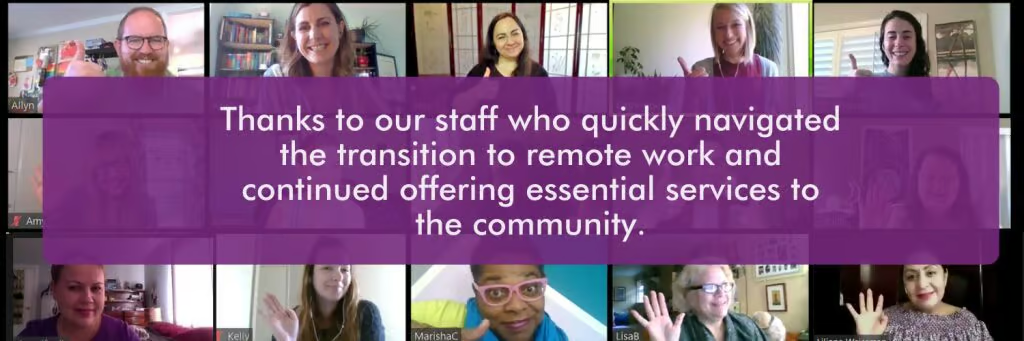
As we reflect on all that’s happened this year, we can’t help but be impressed with all that our staff and community accomplished, and the strength and resiliency survivors showed us. In March, when families went into stay-at-home orders, communities worldwide faced an increase in domestic violence incidents and a decrease in child abuse reporting. Our staff quickly shifted to offer services remotely. By early April, we were offering a new confidential text and chat line, counseling via telehealth, providing support and legal advice for survivors virtually, sheltering survivors in individual safe housing, and making sure people who were isolated had the food and supplies they needed.

Increased AccessWe're here for you web

With each change we made in how we offered services, we saw increased access for survivors. On our crisis line, which continued operation without interruption, we were able to offer much-needed support and information for people experiencing houselessness who were cut off from internet access and couldn’t reach other live call-takers. We first offered information about COVID-19 health and safety, then about wildfires and evacuation zones to those callers. Advocates across the agency took more calls from elders in our community who were isolated, grieving, and feeling lonely. Survivors stuck at home with the people who were harming them and people with disabilities could more easily and safely connect with an advocate through our confidential text and chat line. Families and other survivors could access telehealth and support groups without needing to navigate transportation and childcare. During the recent surge in COVID cases, our urban and rural Promotoras helped share important public health information and resources with the Latino community.

  • 1,304 messages received July-December on our text and chat line
  • School-based parenting group at times tripled in capacity

Housing and Basic Needs

We quickly shifted survivors staying in shelter into alternative housing, at first doubling in capacity. Quarantine and financial hardship meant our staff delivered meals, medications, and hygiene supplies to survivors. Beyond our typical shelter and housing services, we connected with survivors who’d lost wages due to the pandemic and offered rental assistance. During the Clackamas County wildfires, we called survivors to offer emotional support and ensure they were able to evacuate safely. Most recently, we supported Clackamas County Public Health by helping people exposed to COVID be able to quarantine by paying costs of rent, utilities, and food.

  • 160 adults and 117 children offered safe shelter
  • 74 adults and 152 kids provided with COVID rent relief
  • 25 households (~ 70 adults and kids) in November and December received financial help with quarantine costs after COVID exposure

Advocacy98418982_3056545041032429_5798791790513356800_o

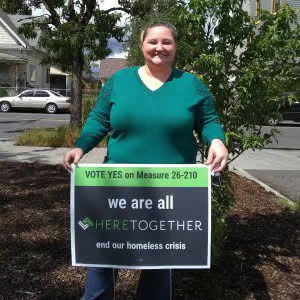
When the pandemic first began, we collaborated with local officials to ensure survivors’ safety needs were considered. We advocated for Measure 26-210, which will provide much-needed funding for homelessness services in the tri-county area. This fall, in collaboration with the Safe Kids Coalition, we campaigned for the Children’s Safety Levy, which would have provided much-needed funding for services for kids experiencing child abuse and neglect, trafficking, and family violence. Most recently, our advocates provided public testimony in support of extending the statewide eviction moratorium until June 2021.

Community Collaboration

Through all this, we witnessed incredible acts that inspired us and moved our hearts. We saw partnering organizations leverage the resources they had to care for those most vulnerable in our community. We saw people reach out to check on one another, make sure they were well, and ask if help was needed. We saw schools place a new emphasis on access to resources—knowing they might be the only connection outside the home for some families. We saw people giving generously, through new partnerships, hybrid events, or by sewing masks, donating extra produce, or stimulus checks. We saw neighbors step in to pay survivors’ rent, deliver groceries, or open their homes for people evacuating wildfires.

Survivors shared with us that though things were scary and uncertain, they had faced fear and uncertainty before, and in some ways, they felt stronger and better able to navigate the challenges in front of them.

It is in the spirit of that communal strength and resiliency that we greet 2021.

131950526_1116944765422370_2267597115542475520_o


Yesterday evening, alongside many partnering social service providers, CWS staff advocated for the passage of LC 18 (legislative concept 18) which would extend the eviction moratorium currently set to expire on Dec. 31. The eviction moratorium has ensured that families experiencing job loss and financial hardship due to the COVID-19 pandemic are not subject to the further trauma and instability of eviction. LC 18 would extend the moratorium through June 2021, providing families an opportunity for recovery, and not leaving families houseless during a currently raging pandemic.

Emilie Azorr, one of our advocates co-located at the Department of Human Services, provided testimony in support of LC 18 on behalf of survivors. Her testimony shared so vividly the experience of survivors, their strength and resiliency, and the critical need for additional resources, that we wanted everyone to have the opportunity to read it.

Emilie A. Retouched

Emilie Azorr written testimony:

Co-Chairs President Courtney & Speaker Tina Kotek, Co-Vice Chairs Sen. Girod and Rep. Drazen, and members of the committee,

Re: Support for LC 18, extending eviction moratorium and the rental assistance program.

For the record, my name is Emilie Azorr and I am here on behalf of Clackamas Women’s Services. Clackamas Women’s Services serves survivors of domestic and sexual violence in Clackamas County, providing support to hundreds of survivors and their families each year. I’m a direct service advocate, which means I have the privilege of working with survivors and their families one-on-one. I support survivors with plans to keep them safe, I work with our wonderful community partners in Clackamas County to get survivors connected to wrap-around services, and I have the joy of making someone’s world feel a little bit bigger when the violence they’ve experienced makes it feel so small. I am here today because I know firsthand how important it is for our legislature to extend the eviction moratorium to support all domestic and sexual violence survivors in the State of Oregon.

I’ve been honored to serve survivors for the last 3 years, but right now it’s hard for me to remember what it was like to be an advocate before the pandemic hit. It’s hard for me to imagine a time when the survivors I serve were not calling our agency wondering how they were going to pay their rent. It’s hard to remember a time when I was not focused on keeping survivors safe from abuse and safe from an inevitable eviction. So many survivors I’ve worked with have finally found safety in their living situations after years of harm and their home is not only a symbol of independence and self-sufficiency but a symbol of freedom from abuse. The joy that survivors have experienced from securing safe and stable housing with the help of our agency is now gone, replaced by the fear of eviction and loss of safety. If survivors are evicted from their safe and stable housing, their only option may be to return to their abuser, who can provide them with shelter and financial safety during an uncertain crisis. We know that if a survivor returns to an abuser, their chances of leaving again go down, and the risk factor for leaving goes up. It is essential that we keep survivors in their safe and stable living situations by extending the eviction moratorium to ensure they are able to continue their lives free from abuse.

Our agency also supports survivors who are still in their relationships or situations where they may be experiencing harm. These survivors are facing particularly complex circumstances as a result of the pandemic. Survivors who are still in their abusive relationships may be experiencing more episodes of harm, increased risk of lethal harm, and the resources and harm reduction techniques that they’ve used in the past may not be available anymore. These survivors may also be experiencing financial abuse from their partner and there may be consequences for them if the moratorium is not extended. Abusers may force the survivor to put leases in their names, making them financially liable for all expenses. These survivors may not have the financial resources to have stayed up to date on rent as they may be the only financial provider. Other survivors may share a lease with an abuser, but an abuser is not allowing them to pay any rent or they are not allowed to find work or financial resources. If an abusive partner has not been paying rent and has refused to allow a survivor to contribute, the survivor may end up being liable for thousands of dollars at the end of the moratorium in back owed rent. Our advocates need more time to work with these incredibly resilient survivors to come up with a plan to keep them safe and explore what options they have to not be financially liable for their abuser’s harm. This may be coming up with a plan to leave or exploring ways to safely remain in a relationship and pay off any back owed rent. But we cannot do this if the moratorium ends on December 31st.

Our State has incredibly domestic and sexual violence advocates working tirelessly throughout this pandemic to support survivors of abuse. Clackamas Women’s Services is one of many agencies doing vital work across the State to keep survivors housed in this pandemic and I am humbled to be a witness to the resilience and strength I see in our survivors every day. I am grateful to you all for taking up this bill because it is essential to the safety of our survivors throughout the State. COVID has been devastating to families everywhere, and our survivors aren’t immune from this. As someone who is working silently and fiercely to support survivors, I urge you to please support this bill. Your advocates and domestic and sexual violence agencies are depending on all of you to voice your support for survivors by passing this bill.

118472870_117071716785216_132803482162477553_o


Clackamas County Children need reliable and sustainable help and support. Just last year, over 2,000 children were reported to have experienced some form of abuse and neglect in our county, and 495 children spent at least 1 day in foster care according to the Oregon Department of Human Services. Traumatic experiences take a tremendous toll on the health and well-being of children in our community, and successful prevention and intervention measures have a cost.

For 10 years Safe Kids Clackamas has worked to ensure critical services remain available for all children who need them in our community, through a local-option levy which would create steady funding for services for years to come. Spearheading this effort is a collaborative team of nonprofits and public service agencies who serve our most vulnerable youth and witness the impact violence has on their lives. The Steering Committee, comprised of leaders from Parrot Creek, CWS, Children’s Center, Northwest Family Services, and CASA, have been working diligently on this effort.

In December 2019, the Board of County Commissioners committed to funding a comprehensive poll to assess the viability of putting a Children’s Safety Levy on the November 2020 ballot. Conducted in June, the poll verified strong support among Clackamas County residents. The poll affirmed what we have seen over the years–Clackamas County voters are willing to support a levy that provides core safety services for children and youth. On August 13, Clackamas County Commissioners voted unanimously to refer the measure to the November ballot.

The ballot measure comes at a time when the pandemic has laid bare existing gaps in our protective systems and the needs of vulnerable populations in our community. Reports have shown a continued decline in child abuse reporting due to children having limited interactions with safe adults in the community while at home under stay-at-home orders. While many families are struggling with the impact that disruptions in schooling will have on young people, children experiencing abuse and neglect without adequate intervention will disproportionately experience the harmful impacts for many years to come.

This is why we are so excited to see the Clackamas County community prioritize the needs of these children. The Children’s Safety Levy would support local children’s safety prevention and intervention services delivered by nonprofits and will be used only within Clackamas County. According to the Yes for Clackamas Kids website, “The average homeowner will pay just $3.78 per month on a home with an average assessed value of $302,000.” For less than the cost of a coffee each month, Clackamas County voters can build a strong foundation for the future of our children.

With the November election less than 60 days away, we need your help to ensure the levy passes. Follow and share the Clackamas Kids Facebook, or Instagram posts to help spread the word. You can also make a donation to the campaign, sign up to volunteer, and learn more on their website. And vote yes on Measure 3-564!

FOR IMMEDIATE RELEASE Monday, May 4th, 2020 2013 Small
CONTACT Brenda Kinoshita,
Cell: (971) 235-4203;
Email: brendak@cwsor.org

Portland, OR (May 12, 2020) — Principal, a local insurance and investment firm, announced a financial sponsorship today at the Portland Mercado during the pickup of fresh meals for domestic violence survivors. Their sponsorship is the first in an innovative new partnership between Clackamas Women’s Services (CWS), Hacienda Community Development Corp. (CDC), and Portland Mercado vendors.

With domestic violence increasing due to stay-at-home orders, domestic and sexual violence response agencies like CWS are working creatively to meet the changing needs of survivors. CWS is now sheltering twice as many survivors as usual–many in safe spaces without kitchen access. Through a partnership with Hacienda CDC, survivors and their families are now receiving meals made fresh by Portland Mercado vendors.

Today, two Portland Mercado vendors, Fernando’s Alegria and Qué Bacano, prepared a total of 44 meals, which will be delivered to survivors by CWS staff to maintain survivor safety and confidentiality. This is the first of two pickup and deliveries this week, totaling almost 100 meals for survivors and their families. Through a very generous donation, Principal® is sponsoring this week’s meals.

“Principal is proud to be part of #thegivingchain by supporting our local businesses and giving back to our community during this uncertain time.  We hope other companies will be inspired to join The Giving Chain, too,” said Tom Fink, Principal.

The project grew from a small pilot project. Portland Mercado vendors were struggling with decreased business, while domestic violence survivors were limited to bland microwave and canned meals, due to lack of full kitchen access. Both CWS and Hacienda CDC want to grow the partnership to support other vulnerable populations CWS serves with vibrant, nutritious meals.  Survivors receiving tele-health counseling and survivors attending parenting groups may be homebound, without much opportunity to safely access food.

“Clackamas Women’s Services appreciates Principal’s support of this innovative project, which partners nonprofit agencies with local businesses, for the good of the community,” said Brenda Kinoshita, Director of Development and Communications, Clackamas Women’s Services.

CWS seeks additional support for the project, which will help ensure its financial sustainability until stay-at-home orders are lifted. To support the venture, visit https://cwsor.ejoinme.org/support. If you or anyone you know is experiencing domestic or sexual violence, child or elder abuse, help is available through CWS’ 24-hour support line 1-888-654-2288 and M-F 9:30 am-4 pm through confidential chat: resourceconnect.com/cws/chat

###

About Clackamas Women’s Services

Clackamas Women’s Services began in 1985 when community members saw women and children in their community impacted by domestic violence and banded together to create a solution. CWS grew out of neighbors opening their homes and sharing what they had in hopes of building a safer community for families. Since that time, CWS has grown beyond shelter to offer a wide range of services for anyone experiencing domestic and sexual violence from initial crisis through to long-term healing. We continue the legacy of working with community members, emergency responders, partnering social services, and for-profit businesses to build communities that protect and support survivors of domestic and sexual violence. Those interested in working with us to break the isolation of domestic and sexual violence through volunteer service or financial support can find more information on our website, https://www.cwsor.org/. The 24-hour support line is 1-888-654-2288.

About Hacienda CDC

Hacienda CDC is a Latino Community Development Corporation that strengthens families by providing affordable housing, homeownership support, economic advancement and educational opportunities. Hacienda CDC was formed in 1992 to provide necessary housing and supportive services in a low-income, predominantly Latino community. Today, we provide safe, stable homes for over 1,500 individuals each year, and over half of those individuals are children. Hacienda embraces a holistic approach to development and serving Latinos throughout the region with programs in Community Economic Development, Homeownership Support, and Youth & Family Support Services. We have grown to become Oregon’s largest Latino-led, Latino-serving housing organization and remain a trusted name in the Latino population. www.haciendacdc.org

About Principal®

Principal (Nasdaq: PFG) helps people and companies around the world build, protect and advance their financial well-being through retirement, insurance and asset management solutions that fit their lives. Our employees are passionate about helping clients of all income and portfolio sizes achieve their goals—offering innovative ideas, investment expertise and real-life solutions to make financial progress possible. To find out more, visit us at principal.com.

FOR IMMEDIATE RELEASE Monday, May 4th, 2020 2013 Small
CONTACT Brenda Kinoshita,
Phone: (503) 557-5820;
Email: brendak@cwsor.org

Oregon City, OR (May 4th, 2020) — Clackamas Women’s Services (CWS), a local domestic and sexual violence response agency, is partnering with Hacienda Community Development Corp. (CDC), owners of the Portland Mercado, and Mercado vendors, to provide warm meals for domestic and sexual violence survivors during the pandemic. The partnership serves a dual purpose: supporting culturally-specific local businesses and caring for domestic violence survivors and their families currently receiving shelter.

The project began several weeks ago as a small pilot, with food cart vendors at Portland Mercado cooking fresh, packaged meals which Clackamas Women’s Services (CWS) staff delivered to survivors sheltered safely in confidential locations in Clackamas County. The organization delivered 42 meals the first week and is now expanding to deliver nearly 100 fresh meals weekly. Four small businesses have participated so far: La Arepa, Fernando’s Alegria, Kaah Market, and Qué Bacano! These businesses are part of the Portland Mercado, a Latino Market and economic development initiative of Hacienda CDC, which supports 19 small businesses and brings together diverse cultures through food, art, and entertainment.

“The comfort of meals prepared by Mercado vendors is much appreciated by the survivors receiving them. Some participants look out their windows when they hear the footsteps of our staff delivering a box of necessities, including the Mercado meals.  They see the face of someone who cares, and the fresh meals show survivors that the community cares about them as well,” said Melissa Erlbaum, Executive Director of Clackamas Women’s Services.

The partnership is an innovative response to the ongoing challenges created by the coronavirus pandemic. Though effective at slowing the spread of the COVID-19, the recent stay-at-home orders have had an immediate and deep impact on local restaurants. The timing is even more challenging for many businesses as spring is usually the time that business picks up. Instead, it feels as if winter has not ended. Meanwhile, domestic violence response agencies are managing an increase in the need for services, particularly safe shelter. CWS is now housing twice as many survivors as usual to accommodate the need without the convenience of a central shelter kitchen for families to prepare meals in.

Domestic violence survivors currently being sheltered have limited access to fresh food. CWS serves many survivors from vulnerable populations including seniors, people with disabilities or with ongoing health conditions, and those reliant on public transportation which makes safely traveling to grocery stores difficult. Additionally, to maintain appropriate social distancing, many survivors are sheltered in spaces without access to full kitchens. While many people are spending their extra time at home baking bread, this is just not an option for many survivors who are subsisting on microwave and canned meals.

“Thank you to Clackamas Women’s Services for thinking about our hard-working small business community. This is just one of the many examples of our community coming together in crisis to support one another. Juntos we are stronger.”  Ernesto Fonseca, CEO -Hacienda CDC

“This partnership gave us a financial relief during the difficult times we are all going through; it also gave us the opportunity to support members of our community providing them a tasty meal,” Fernando Rodrigues, Fernando’s Alegria.

Portland Mercado vendors have adapted, offering online and to-go orders. Along with partnerships like this, Mercado businesses are able to provide the community with authentic flavors and remain in operation, and domestic violence survivors receive the much-needed comfort a fresh meal can bring,  as well as assurances that their community cares.

###

About Clackamas Women’s Services

Clackamas Women’s Services began in 1985 when community members saw women and children in their community impacted by domestic violence and banded together to create a solution. CWS grew out of neighbors opening their homes and sharing what they had in hopes of building a safer community for families. Since that time, CWS has grown beyond shelter to offer a wide range of services for anyone experiencing domestic and sexual violence from initial crisis through to long-term healing. We continue the legacy of working with community members, emergency responders, partnering social services, and for-profit businesses to build communities that protect and support survivors of domestic and sexual violence. Those interested in working with us to break the isolation of domestic and sexual violence through volunteer service or financial support can find more information on our website, https://www.cwsor.org/. The 24-hour support line is 1-888-654-2288.

About Hacienda CDC

Hacienda CDC is a Latino Community Development Corporation that strengthens families by providing affordable housing, homeownership support, economic advancement and educational opportunities. Hacienda CDC was formed in 1992 to provide necessary housing and supportive services in a low-income, predominantly Latino community. Today, we provide safe, stable homes for over 1,500 individuals each year, and over half of those individuals are children. Hacienda embraces a holistic approach to development and serving Latinos throughout the region with programs in Community Economic Development, Homeownership Support, and Youth & Family Support Services. We have grown to become Oregon’s largest Latino-led, Latino-serving housing organization and remain a trusted name in the Latino population. www.haciendacdc.org

2013 Small

FOR IMMEDIATE RELEASE: Tuesday, March 17, 2020
CONTACT: Brenda Kinoshita, (503) 557-5820, brendak@cwsor.org

Statement of Melissa Erlbaum, Executive Director at Clackamas Women’s Services, On A Safe Place Family Justice Center Closure to the Public

Today the decision was made to close A Safe Place Family Justice Center to the public effective tomorrow, March 18th, during the current health crisis. This decision was made after lengthy deliberation and we support the measures Clackamas County and our FJC partners are taking to prevent the spread of COVID-19 and keep our community safe. We will update the community as soon as we know the reopen date.   

We continue to be as present and available to the community as ever, while also working wisely to limit the spread of COVID-19 and prevent further impact on vulnerable populations.  We understand that domestic and sexual violence and elder abuse do not stop during this critical time; if anything, external stressors and lack of resources can exacerbate violence that is already happening. Our staff continues to work during this time and will continue to provide vital services to the community.   

Our movement began over 50 years ago with the formation of crisis lines— to both offer and receive support and connection without meeting face to face. It remains a core service through which we can provide safety planning, information about community resources and protections, and emotional support. And it’s a space we’re comfortable and confident continuing to provide support in now. Our advocates continue to shelter and provide those resources to the community at large. 

And we are learning to grow, adapt, and expand the way we serve the community. Our advocates continue to shelter and provide ongoing case management to survivors. We are exploring ways to deliver much-needed food and supplies to survivors and families in need. Counselors are providing mental health therapy online or over the phone. We continue to connect people with protective orders and our LEAP program is conducting intakes, meetings, and providing legal advice by phone or video-conference. Our children’s program is preparing a way to conduct support groups virtually and art-based therapy groups. We’re using all our time-tested crisis response skills and outside-of-the-box thinking and putting them to good use during this crisis.   

Please reach out to us for help and support.  We’re here for you. We know this time is challenging for everyone, but it only reaffirms what we have always known: the way to get through tough times is together.

###